




*The colored areas of the map above represent parishes with currently known records for the given species (Source: Jeff Boundy, LA Dept. of Wildlife and Fisheries). By no means does it represent the full range of the species in the state, nor does it necessarily mean that a species can be found throughout the parish with the record. This is provided as a guide to where you might be able to find these species in the state and to aid in identification. A descriptive explanation of the range of each species can be found in the text below.
Other Common Names:
Subspecies: Only the Western Bird-voiced Treefrog, Hyla avivoca avivoca, occurs within Louisiana.
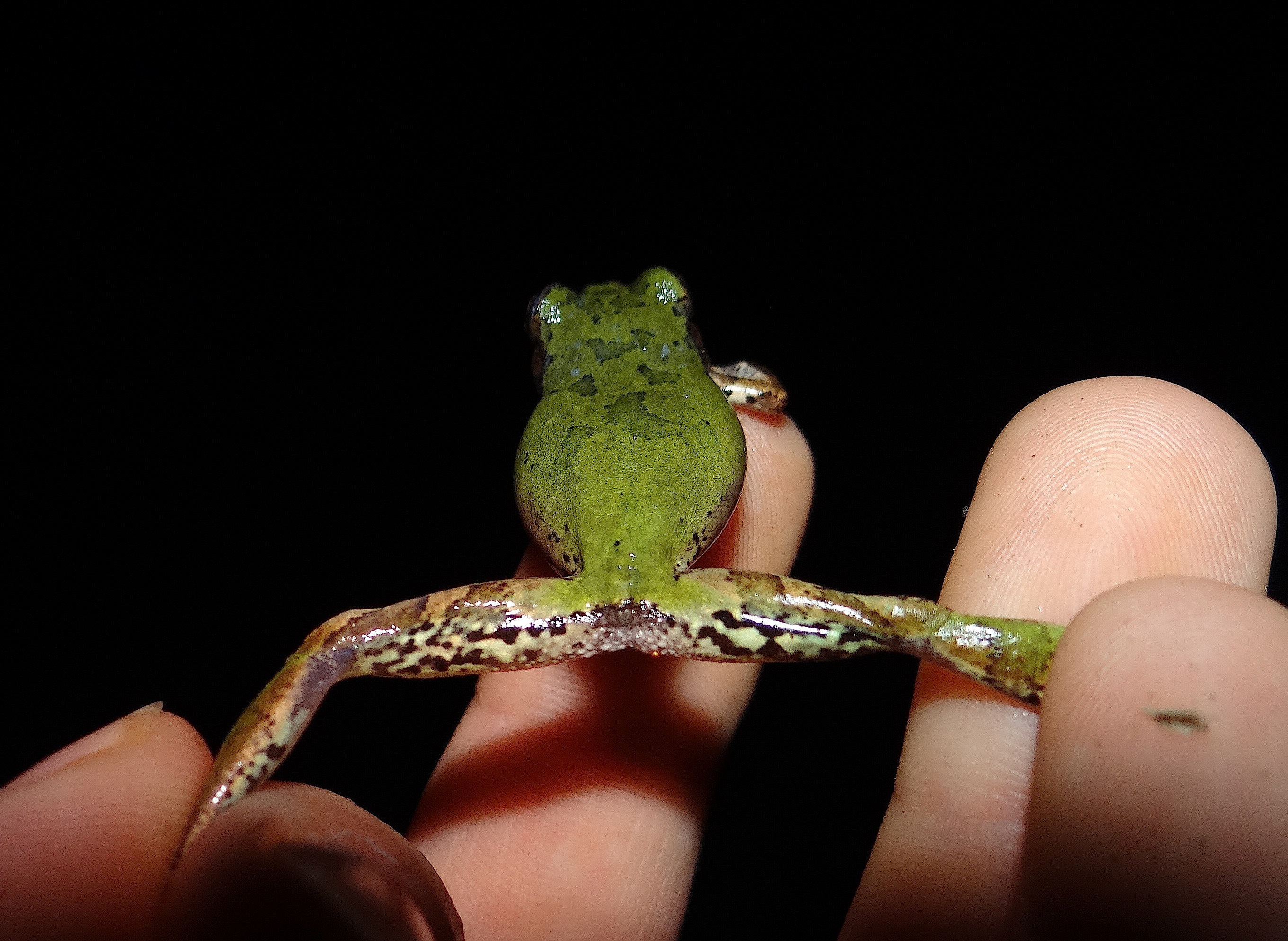
Adult Description: A medium-sized treefrog (maximum 2”) with variable coloration of pale gray, brown, or green. Expanded, adhesive toe pads used for climbing. Skin is relatively smooth with a fine grainy texture compared to bumpy skin of gray treefrogs. Smaller and less stout in build than gray treefrogs. Often with darker lichen-like irregular markings between eyes, on middle of back, and on sides which extend upwards over shoulders through eardrum to eye. A prominent white, yellowish, or light green patch below each eye. Usually light green, but sometimes greenish yellow, markings on rear of thighs, which are typically concealed when at rest. Belly is dull white.
Similar Species:
Species Range: Extreme southern Illinois south along east side of Mississippi River to Louisiana and east to Florida panhandle, central Georgia, and adjacent southwestern South Carolina. Isolated populations west of Mississippi River in Louisiana, Arkansas, and Oklahoma.
Louisiana Range: Florida Parishes as well as parishes just west and south of Lake Pontchartrain, as well as several other disjunct areas in central and north Louisiana.
Adult Habitat: Wooded swamps along rivers and streams, particularly bald cypress-tupelo forests.
Natural History: Bird-voiced Treefrogs are usually found in trees and shrubs except when breeding. They become nocturnal in warmer weather, using their camouflage during the day to blend with limbs, trunks, or tree cavities they are resting upon. They eat any arboreal arthropods they can fit into their mouths. Predators have not been reported but likely include snakes. They breed from early April to mid-August in ephemeral water or swamps. Females may lay over 800 eggs in packets of 3–15 eggs which quickly break apart and sink to bottom. Eggs hatch in less than 2 days and tadpoles metamorphose in about 1 month. Maturity takes 2 years in females. Wild longevity is at least 4 years in females.
Call: Rapid series of up to 25 bird-like whistles lasting several seconds, sometimes varying in tempo.
Best Time and Place to Observe: Listen for their distinctive vocalizations at night in mid-late spring and summer in appropriate habitats. Follow the sound of calling males as they descend from canopy to breed.
Global Conservation Status: Bird-voiced Treefrogs have a relatively wide distribution in the southeastern United States and a presumed large population, and thus, are listed as Least Concern by the IUCN Red List. Their NatureServe Global Conservation Status Rank is G5 (Secure).
Federal Conservation Status: None.
Louisiana Conservation Status: Bird-voiced Treefrogs do not have any special status in Louisiana.
Author's Remarks: I have only photographed this species five times anywhere in its range, and that was in 2013 & 2014 in Pearl River WMA in St. Tammany Parish, in 2016 at Black Bayou Lake NWR in Ouachita Parish, and in 2019 at Frenchtown Road CA in East Baton Rouge Parish I have heard their calls in the Manchac area (St. John/St. Charles Parish), several sites in St. Tammany Parish, at the Barataria Preserve of Jean Lafitte National Historic Park and Preserve in Jefferson Parish, and in July 2015 at the Louisiana State Arboretum at Chicot State Park in Evangeline Parish. In 2016 I found the beautiful tadpoles of this species in Jefferson Parish. And in May 2022 I photographed a couple beautiful individuals near Folsom in St. Tammany Parish.
