




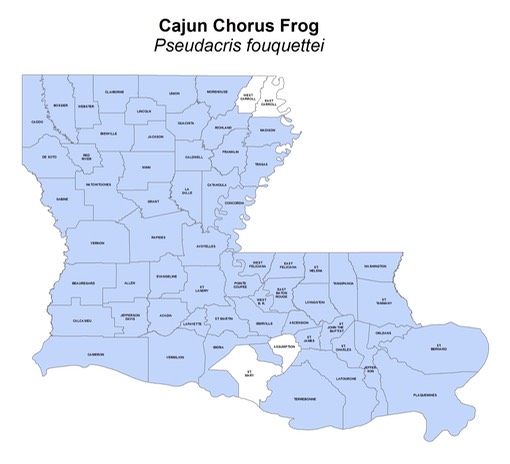
*The colored areas of the map above represent parishes with currently known records for the given species (Source: Jeff Boundy, LA Dept. of Wildlife and Fisheries). By no means does it represent the full range of the species in the state, nor does it necessarily mean that a species can be found throughout the parish with the record. This is provided as a guide to where you might be able to find these species in the state and to aid in identification. A descriptive explanation of the range of each species can be found in the text below.
Other Common Names:
Subspecies: No subspecies recognized.
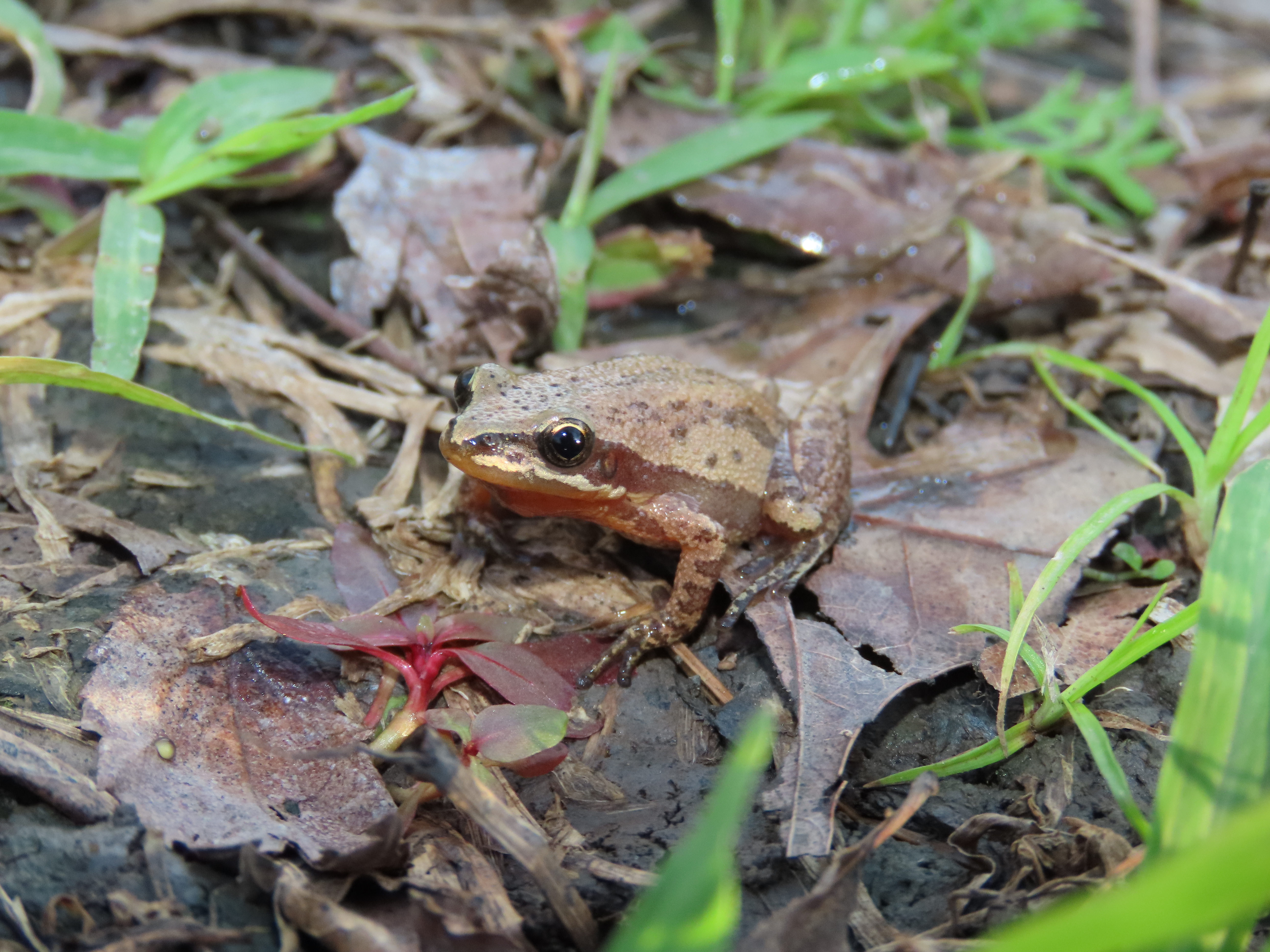
Adult Description: A small frog (maximum 1.4”) with variable coloration, generally some shade of gray or tan. Three dark stripes present on back which extend length of body. Often these stripes are irregular, broken up into spot rows, very pale, or absent. A dark band extends from tip of snout past eye, over forelimb, and onto side of body. A pale stripe above dark mouth border extends to forelimb. Dark crossbars on limbs. Belly is white.
Similar Species:
Species Range: Western Mississippi, west through Louisiana into east Texas, north through eastern Oklahoma, east through Arkansas, and into extreme southeastern Missouri.
Louisiana Range: Nearly statewide but absent from extensive swamps and coastal marshlands.
Adult Habitat: Highly varied, including forests, fields, swamps, savannas, prairies, and ditches.
Natural History: Cajun Chorus Frogs are mostly diurnal, but outside of their breeding habitats, they are happened upon usually by chance rather than targeted searches. Outside of the breeding season they are notoriously difficult to find, and may be semi-fossorial, spending much of their time below ground. They presumably feed upon a variety of small invertebrates. Reported predators include snakes, but also likely include birds, turtles, mammals, and even some large invertebrates. They breed from November to April usually in small ephemeral wetlands with emergent vegetation. Females lay up to 1,500 eggs in small clumps of 20–100 eggs which are attached to submerged vegetation. Eggs hatch in 4–11 days and tadpoles metamorphose in about 1.5–3 months. Maturity is unknown but likely takes 1–2 years. Wild longevity is unknown but likely at least 4 years.
Call: An ascending clicking trill likened to the sound of running a thumb along a stiff comb that lasts up to 1–2 seconds.
Best Time and Place to Observe: Listen for their clicking choruses, which can be heard during the day as well as night, in roadside ditches or temporary pools where they often call amid vegetation in or near the water. They are quick to cease calling when approached and are notoriously tough to spot even when right over their calling area. They are also quick to dive under the water amid the vegetation if alarmed.
Global Conservation Status: Cajun Chorus Frogs have a relatively wide distribution in the south-central United States, a presumed large population, and tolerate a degree of habitat modification, and thus, are listed as Least Concern by the IUCN Red List. Their NatureServe Global Conservation Status Rank is G5 (Secure).
Federal Conservation Status: None.
Louisiana Conservation Status: Cajun Chorus Frogs do not have any special status in Louisiana.
Author's Remarks: I have seen or heard these guys in multiple areas of the state, especially during their breeding season. While they certainly occur in forested habitats, they also routinely call from roadside waters.
