

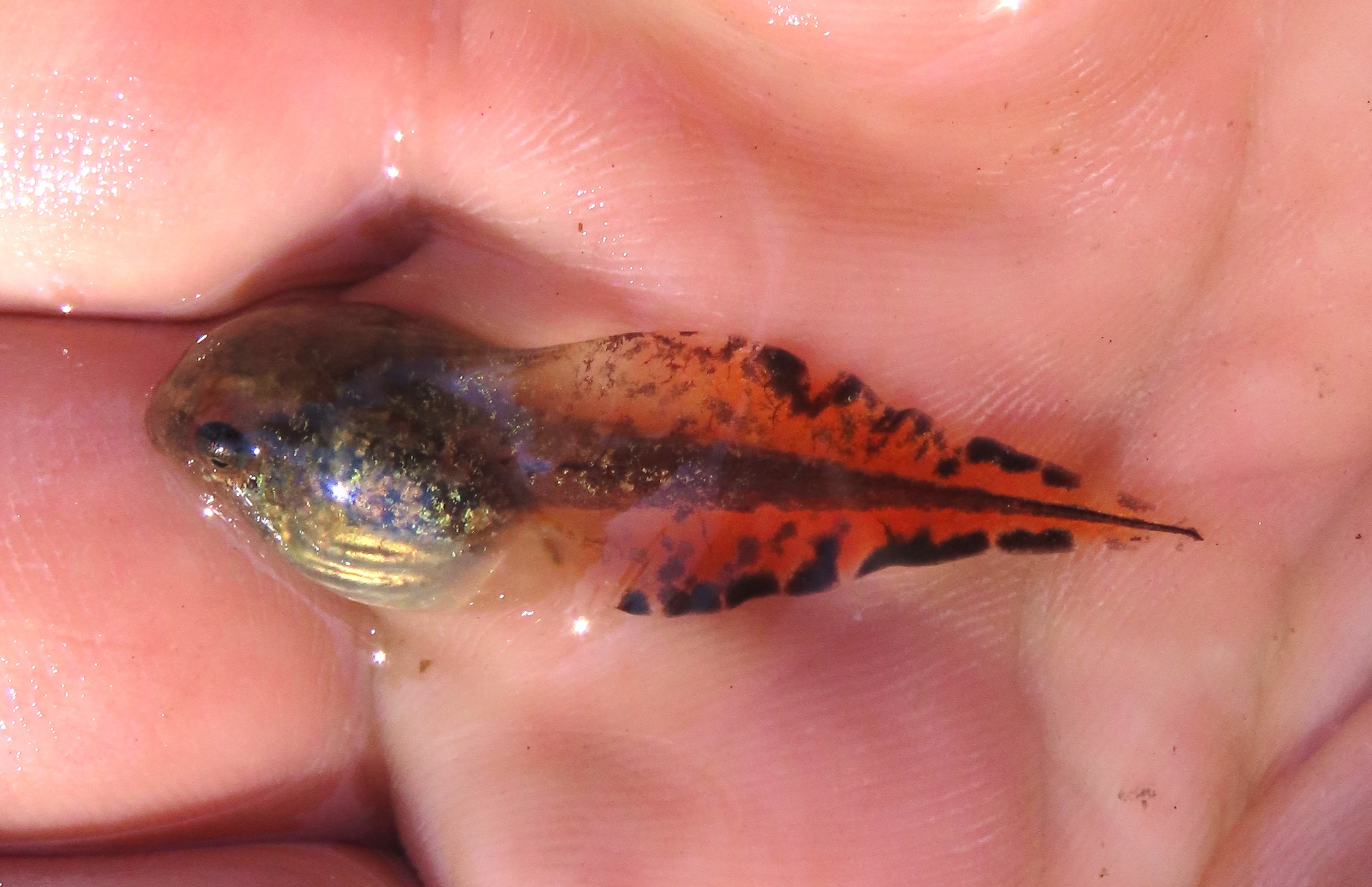


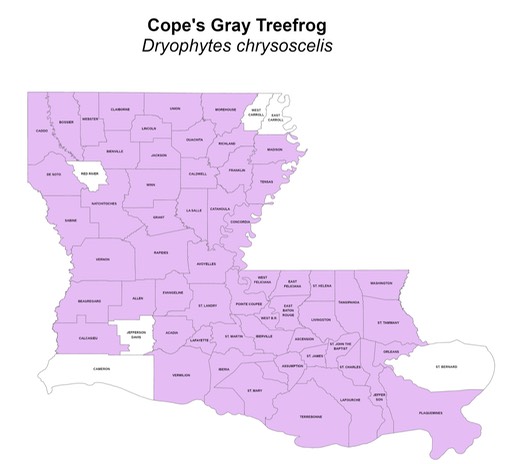
*The colored areas of the map above represent parishes with currently known records for the given species (Source: Jeff Boundy, LA Dept. of Wildlife and Fisheries). By no means does it represent the full range of the species in the state, nor does it necessarily mean that a species can be found throughout the parish with the record. This is provided as a guide to where you might be able to find these species in the state and to aid in identification. A descriptive explanation of the range of each species can be found in the text below.
Other Common Names:
Subspecies: No subspecies recognized.
Adult Description: A medium-sized (maximum 2.4”) stout-bodied treefrog with variable coloration of pale to medium gray or brownish gray, but sometimes greenish, particularly in juveniles. Expanded, adhesive toe pads used for climbing. Skin is bumpy compared to Bird-voiced Treefrogs which look similar. Often with darker lichen-like irregular markings between eyes, on middle of back, and on sides which extend upwards over shoulders through eardrum to eye. A prominent white or light green patch below each eye. Deep yellow to orange markings on rear of thighs, which is typically concealed when at rest. Belly is dull white.
Similar Species:
Species Range: Composite range (includes Cope’s Gray Treefrog and Gray Treefrog) is from southern Manitoba, Canada, east through extreme southern Canada to southern Maine, south to north Florida, west to central Texas, and north through eastern regions of Plains states.
Louisiana Range: Statewide in forested areas, but seemingly absent from cheniers.
Adult Habitat: Forested areas, especially deciduous hardwoods.
Natural History: Cope’s Gray Treefrogs spend most of their time in shrubs and trees when not breeding. They are nocturnal in warm weather, using their camouflage during the day to blend in with limbs, trunks, or tree cavities. They eat a wide variety of insects, particularly beetles and ants. Predators are not reported, but likely include birds, snakes, and mammals. They breed from late March to early September in ephemeral and semi-permanent pools and ponds, but permanent streams and lakes may also be used. Females lay up to 4,800 eggs, but usually much less, in packets up to 45 eggs in a film on water surface. Eggs hatch in 3–7 days and tadpoles metamorphose in about 1.5 months. Maturity takes 2 years. Wild longevity is at least 4 years. A captive gray treefrog (specific species unknown) lived for over 7 years.
Call: A harsh rattling trill, faster and higher pitched than Gray Treefrogs, that lasts 3–4 seconds.
Best Time and Place to Observe: Listen for their distinctive vocalizations at night in spring and summer in appropriate habitats. Calling males as well as females are often found around the breeding site.
Global Conservation Status: Cope’s Gray Treefrogs have a wide distribution in eastern North America, a presumed large population, and tolerate a degree of habitat modification, and thus, are listed as Least Concern by the IUCN Red List. Their NatureServe Global Conservation Status Rank is G5 (Secure).
Federal Conservation Status: None.
Louisiana Conservation Status: Cope’s Gray Treefrogs do not have any special status in Louisiana.
Author's Remarks: I have detected this species in nearly all forest habitats I have ever herped in the state. I usually hear its call from up in the trees, even during the daytime, but have captured many at night calling down low by their breeding pools.
