

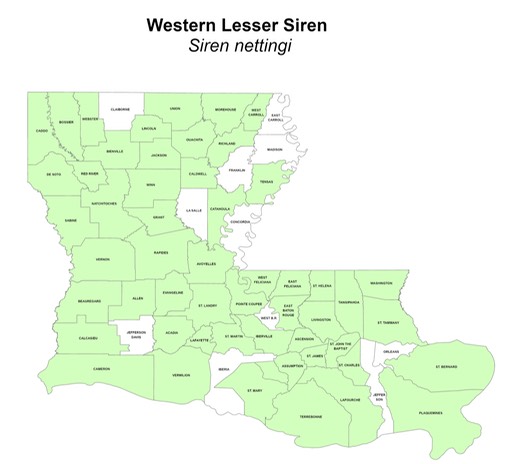
*The colored areas of the map above represent parishes with currently known records for the given species (Source: Jeff Boundy, LA Dept. of Wildlife and Fisheries). By no means does it represent the full range of the species in the state, nor does it necessarily mean that a species can be found throughout the parish with the record. This is provided as a guide to where you might be able to find these species in the state and to aid in identification. A descriptive explanation of the range of each species can be found in the text below.
Other Common Names:
Subspecies: No subspecies recognized.
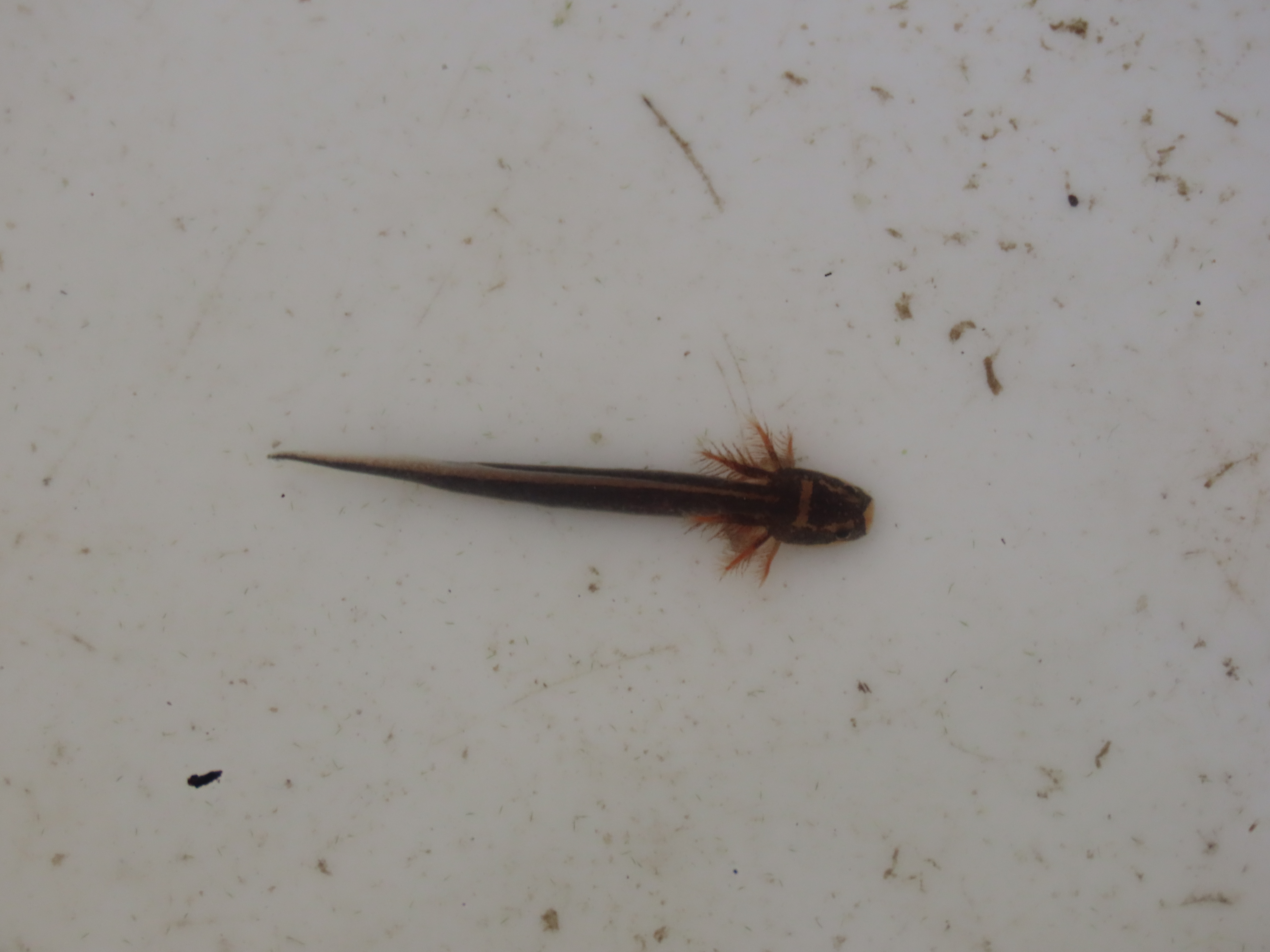
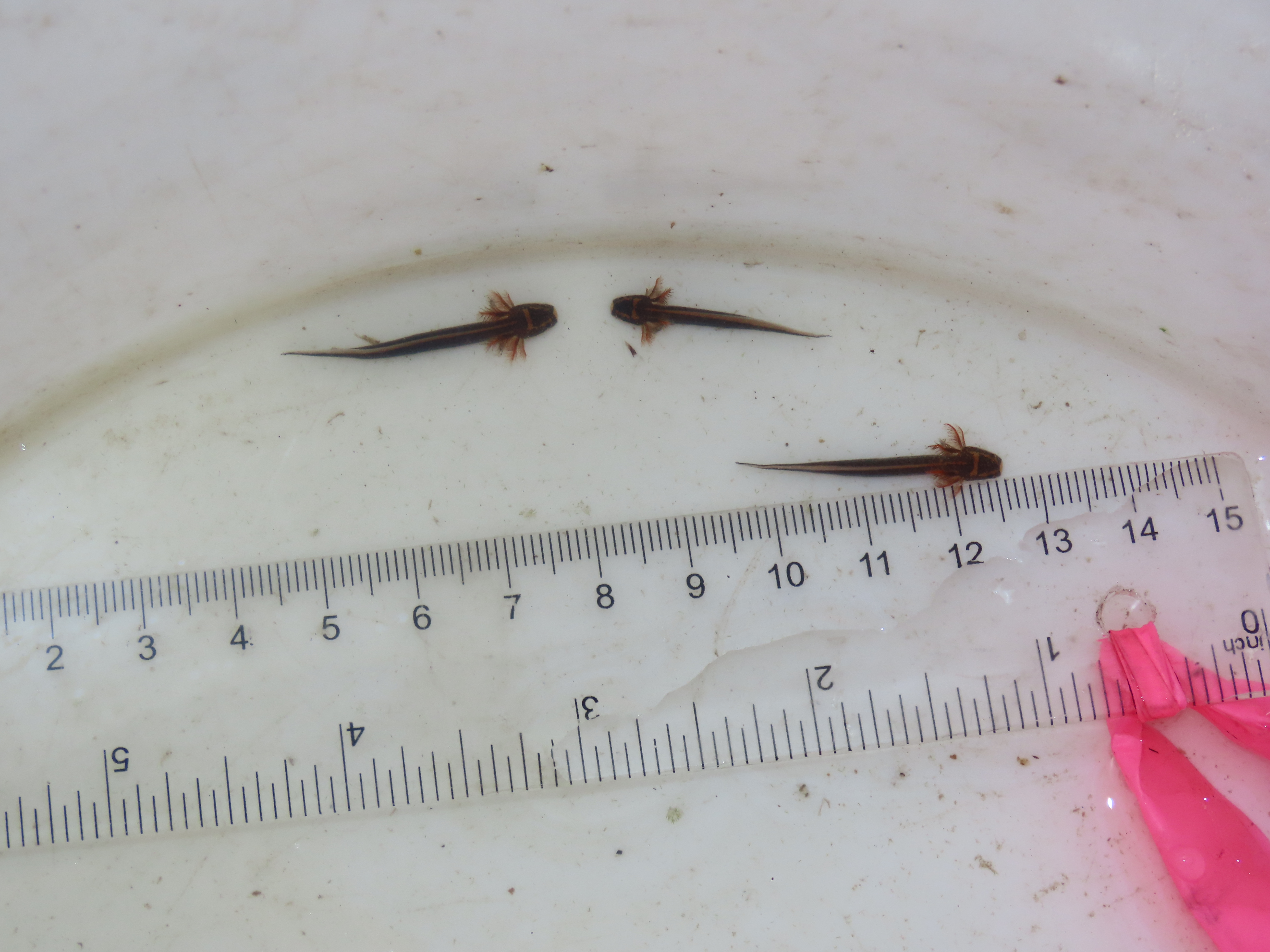
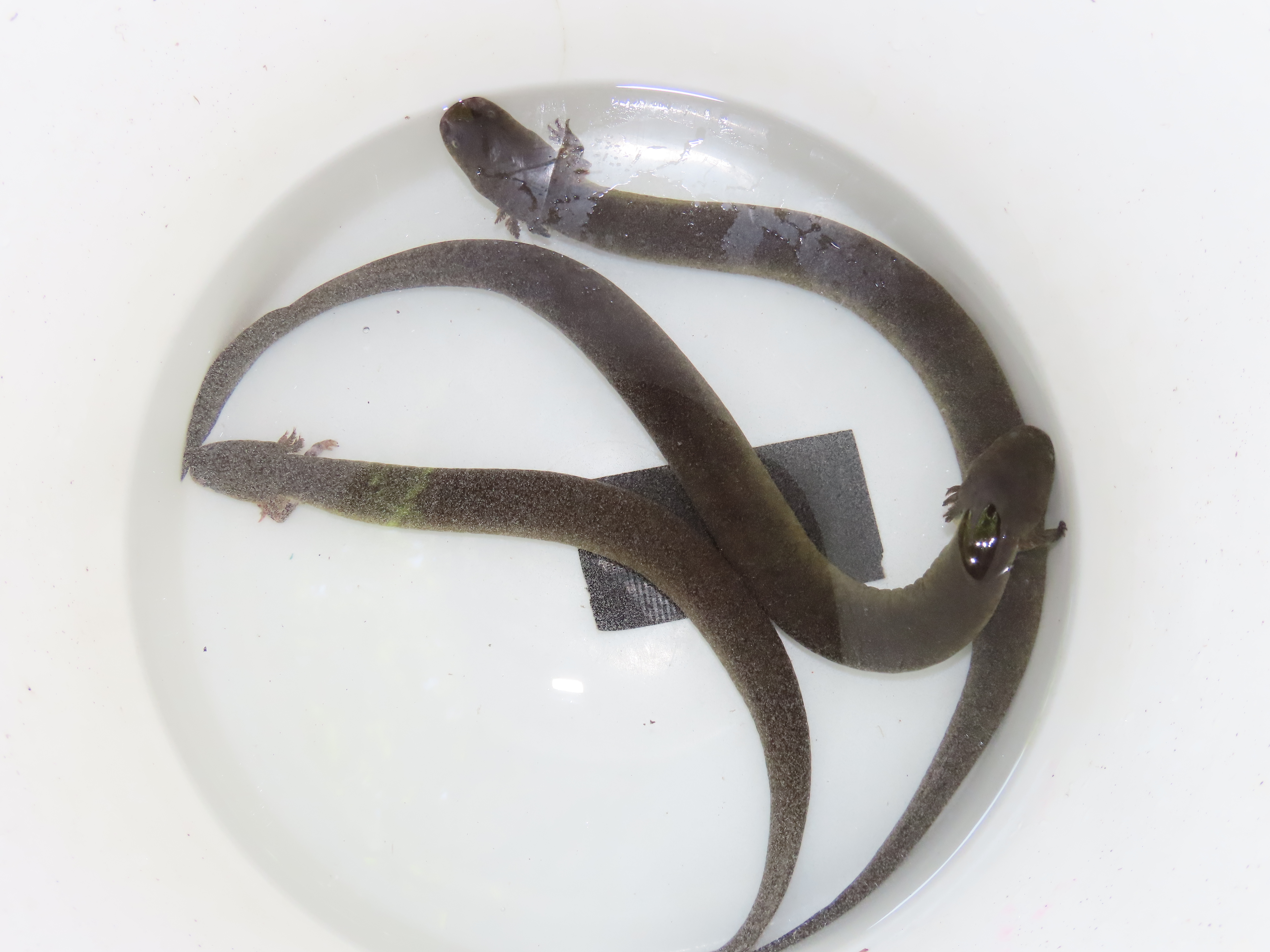
Adult Description: Elongate, large, eel-like salamander (maximum 20.2”) with small eyes, flat head, and bushy gills. Olive, brown, blue-gray, or dark gray on top with scattered dark markings. Yellow markings may also be scattered on body, especially on sides. A yellow stripe usually runs along top of mouth to gills. Hindlimbs absent, possessing only forelimbs with four toes each. 32–34 costal grooves. Belly is lighter than top and may have pale and darker markings.
Similar Species:
Species Range: Mobile Bay drainage west to eastern Texas, north through Mississippi River Valley to southwestern Michigan, and south through Lower Rio Grande Valley to Veracruz, Mexico.
Louisiana Range: Statewide, except in brackish and salt marshes.
Adult Habitat: Nearly any still or sluggish freshwater habitat, even those that may temporarily dry or are slightly brackish, seemingly favoring vegetation-choked sites with a thick bottom layer of mud, leaves, and woody debris.
Natural History: Western Lesser Sirens are aquatic and most active at night when they search for food on the water bottoms. They use chemical cues to find food, which consists of a variety of invertebrates, with crustaceans being probably most important in adults. Amphibians and their eggs, including their own species, are also noted components of Western Siren diet. Some studies have speculated that they may also purposefully eat plants or detritus, but other studies report these items are likely only ingested incidentally when consuming animal prey. Known predators include several species of snakes and fish, but also likely includes alligators and wading birds. Mating in Western Sirens has not been described in the wild. Females lay up to 500 eggs or more in cavities or amidst vegetation on the water bottom in winter. It is unclear the degree of parental care in this species, and whether females or males are the ones that guard the nests, but it is thought nest guarding is typical. Hatching likely takes about 1–2 months. Maturity occurs in 2 years. Maximum wild longevity is unknown, but a captive lived nearly 7 years.
Best Time and Place to Observe: Western Lesser Sirens are secretive and nocturnal and, despite being abundant in some locations, are not often observed without trapping. They may be observable with the aid of a flashlight during cooler months in clear water when active in the shallows at night.
Global Conservation Status: Western Lesser Sirens have a relatively wide distribution primarily in the southeastern United States and a presumed large population, and thus, are listed as Least Concern by the IUCN Red List. Their NatureServe Global Conservation Status Rank is G5 (Secure).
Federal Conservation Status: None.
Louisiana Conservation Status: Western Lesser Sirens do not have any special status in Louisiana.
Author's Remarks: I have trapped a few of these from ponds in Kisatchie National Forest (Natchitoches Parish) in 2012, and dipnetted a couple juveniles from Lake Martin (St. Martin Parish) in 2015. In addition, they would often be caught as bycatch in some subpar sites while trapping for Gulf Coast Waterdogs in Southwest Louisiana. A juvenile was dipnetted from Stuart Lake in Kisatchie on the winter LARE field trip in 2018. And in spring 2026 we captured many very small larva in a couple of isolated ponds in Kisatchie National Forest.
