




*The colored areas of the map above represent parishes with currently known records for the given species (Source: Jeff Boundy, LA Dept. of Wildlife and Fisheries). By no means does it represent the full range of the species in the state, nor does it necessarily mean that a species can be found throughout the parish with the record. This is provided as a guide to where you might be able to find these species in the state and to aid in identification. A descriptive explanation of the range of each species can be found in the text below.
Other Common Names:
Subspecies: No subspecies recognized.
Adult Description: Medium-sized, robust salamander (maximum 4.8”) with broad head and short tail compared to most salamanders. Variable in coloration, from brown, dark gray, to nearly black with lighter blue-gray or silver flecks, most dense on sides, but on back and tail as well. Tail is laterally compressed, often lighter than surrounding color on top edge, and granulose. Usually 10 costal grooves, but sometimes 11. Belly is blue gray with many small blue-gray or silver flecks.
Similar Species:
Louisiana Range: Florida Parishes as well as scattered records throughout central and northern Louisiana. Uncommon in Mississippi River floodplain.
Adult Habitat: Moist forested habitats, from deciduous bottomlands to pine flatwoods to upland mixed pine-hardwood forests, provided there is adequate moisture and suitable breeding ponds nearby.
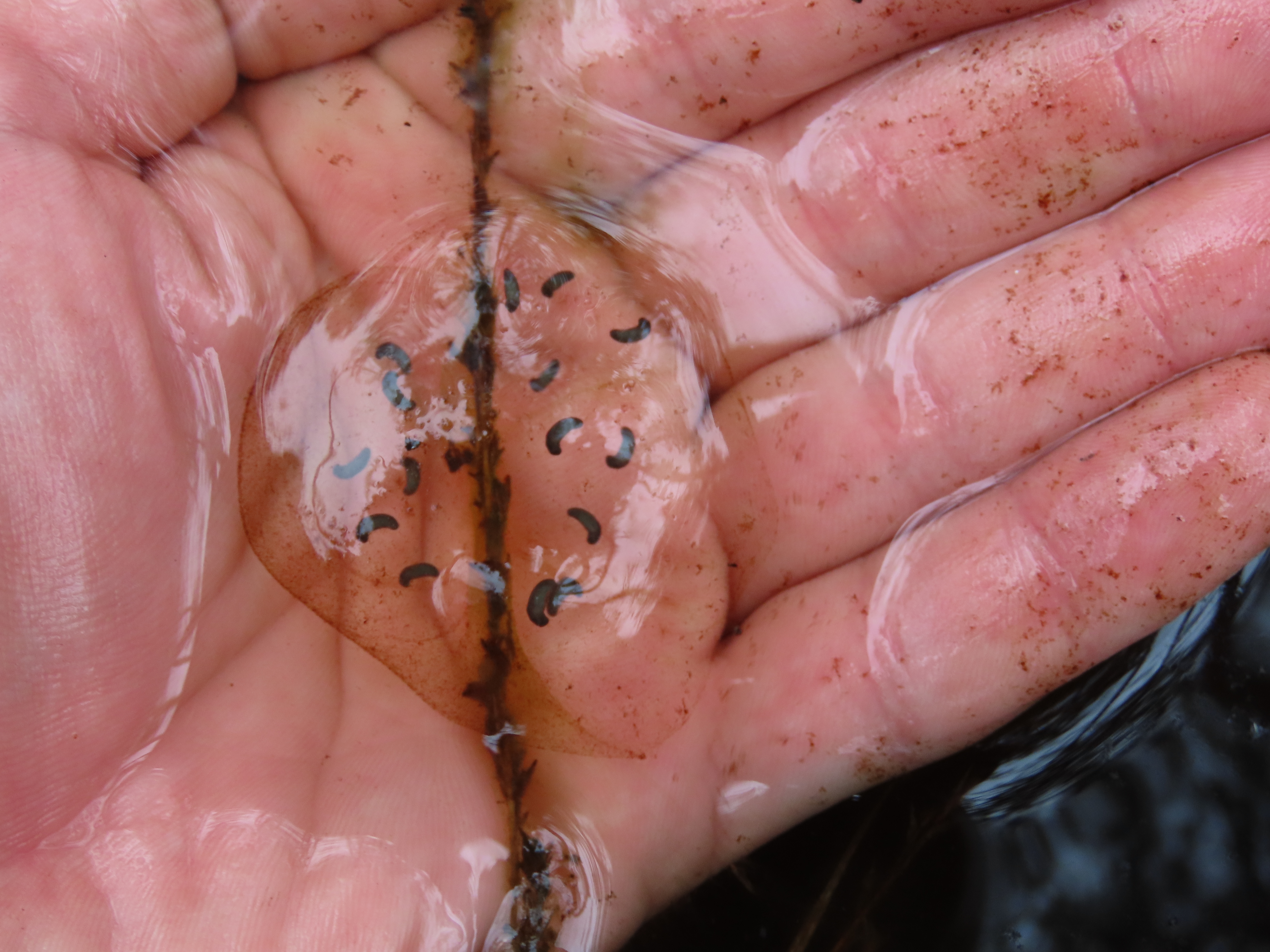
Natural History: Mole Salamanders are active at night and spend most of their lives underground. They prey upon a wide variety of invertebrates. Poison glands on their heads and tails may be an effective deterrent, as no predators of juveniles and adults are reported. From late fall to mid-winter Mole Salamanders migrate overland on relatively warm rainy nights to wetlands to breed. Females deposit 200–500 total eggs in dozens of small, soft jelly egg masses, each with up to 50 eggs, in the water usually by attaching them to small twigs and branches or attached to vegetation. Eggs typically hatch in 20–60 days and larvae may metamorphose in 3–4 months. Maturity may occur in 2 years. Maximum wild longevity is greater than 9 years.
Best Time and Place to Observe: Mole Salamanders can be found in late fall and winter as they shelter under logs or leaf litter with adequate moisture, usually not far from the breeding pond.
Global Conservation Status: Mole Salamanders have a relatively wide distribution in the southeastern United States and a presumed large population, and thus, are listed as Least Concern by the IUCN Red List. Their NatureServe Global Conservation Status Rank is G5 (Secure).
Federal Conservation Status: None.
Louisiana Conservation Status: Mole Salamanders do not have any special status in Louisiana.
Author's Remarks: I have only found this species in Louisiana from Kisatchie National Forest in Natchitoches, a location in the Tunica Hills of West Feliciana Parish, in Kisatchie National Forest near Stuart Lake in Grant Parish in 2018, and I found some eggs in early 2021 in Kisatchie in Rapides Parish.
