

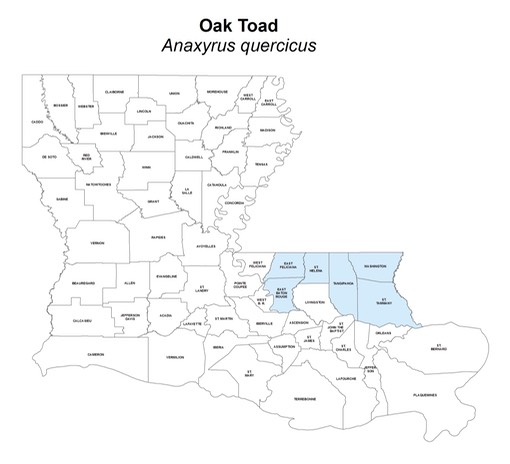
*The colored areas of the map above represent parishes with currently known records for the given species (Source: Jeff Boundy, LA Dept. of Wildlife and Fisheries). By no means does it represent the full range of the species in the state, nor does it necessarily mean that a species can be found throughout the parish with the record. This is provided as a guide to where you might be able to find these species in the state and to aid in identification. A descriptive explanation of the range of each species can be found in the text below.
Other Common Names:
Subspecies: No subspecies recognized.
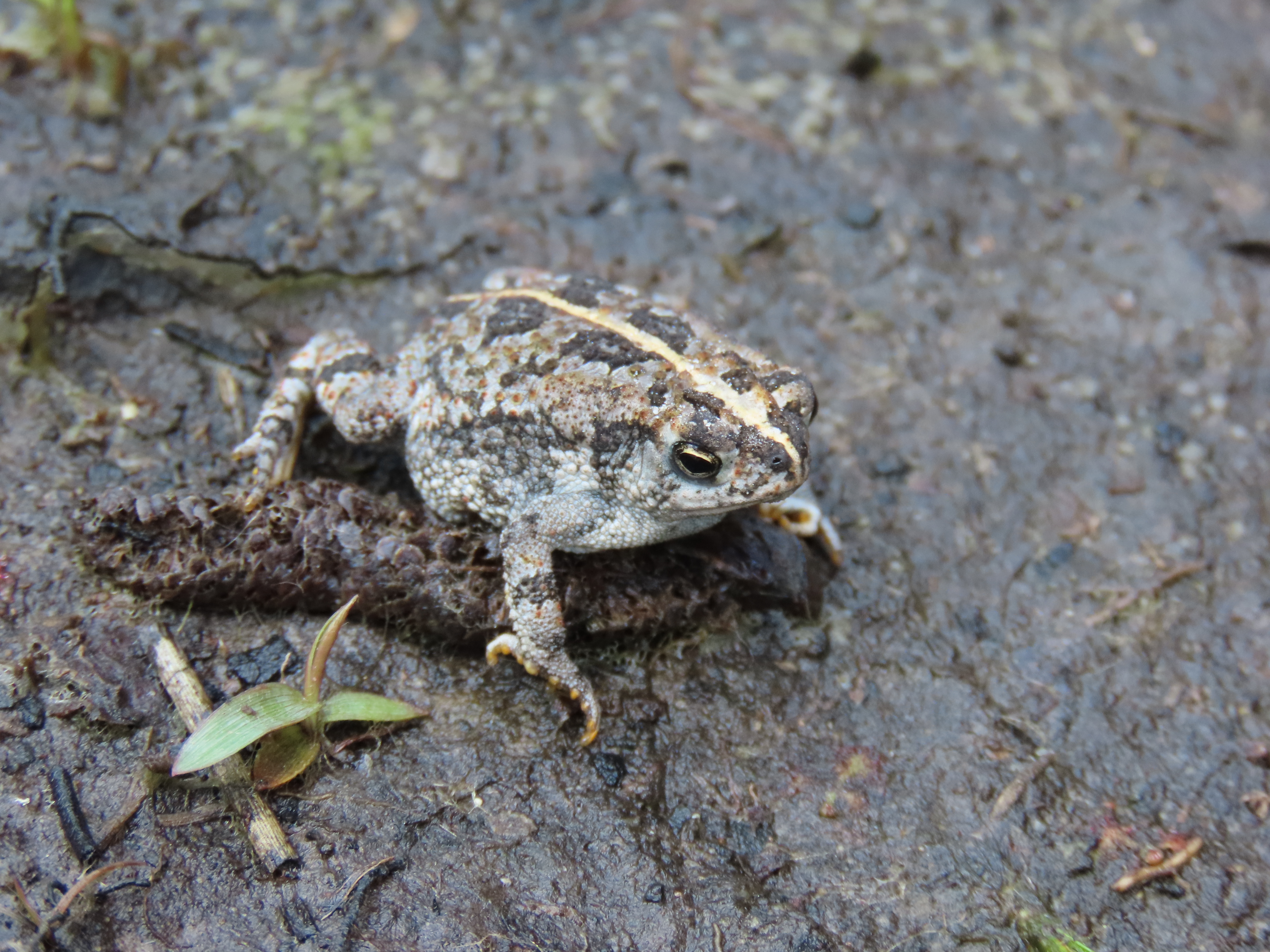
Adult Description: Smallest of North American Toads (maximum 1.4”) with a variable color of gray, brown or black. Evenly distributed small warts. Usually two to five paired dark blotches on either side of a light stripe extending from snout down middle of back. Poison glands elongate and relatively large for a small toad. Cranial crests inconspicuous. Belly is white or gray, often with darker mottling.
Similar Species:
Species Range: Coastal Plain from southeast Virginia to eastern Louisiana, south through peninsular Florida into Florida Keys.
Louisiana Range: Florida Parishes, from Pearl River westward to near Amite River in East Feliciana and East Baton Rouge parishes.
Adult Habitat: Open canopy pine flatwoods, with or without oaks, and coastal live-oak hammocks.
Natural History: Unlike many toads, Oak Toads are diurnal, with nocturnal activity more common during breeding migrations. They are sit-and-wait predators, and will take nearly any arthropod, or even a mollusk, that moves in front of them they can swallow, but are particularly fond of ants. Despite their poison glands, some mammals, birds, snakes, and even larger frogs are known to attack or prey upon Oak Toads. Oak Toads breed from mid-spring through mid-summer. Females deposit 300–500 eggs in many short strands, each containing up to 8 eggs, in shallow fishless water, often attached to vegetation. Eggs hatch in 1–3 days and tadpoles metamorphose in about 1–2 months. Maturity takes about 1–2 years. Maximum wild longevity is 4 years.
Call: A peep each lasting 1 second likened to the sound of a newly hatched chick.
Best Time and Place to Observe: It is easiest to locate this small day-active toad when they hop after being startled while searching recently burned pine flatwoods. Alternatively, listen for their characteristic peeps in the afternoon after a warm rain fills temporary pools in appropriate habitat. But be warned, they stop calling when approached, and can be notoriously difficult to locate even within small pools, as they hide in grass clumps and other vegetation.
Global Conservation Status: Oak Toads have a relatively wide distribution in the southeastern United States, a presumed large population, and tolerate a degree of habitat modification, and thus, are listed as Least Concern by the IUCN Red List. Their NatureServe Global Conservation Status Rank is G5 (Secure).
Federal Conservation Status: None.
Louisiana Conservation Status: Oak Toads have a ranking of S2 (imperiled because of rarity – 6-20 known extant populations) in Louisiana.
*** If you live in the range of this species in Louisiana and believe you may have observed this species please let me know (take a picture or audio recording if possible), as there may be more unknown populations in the state.***
Author's Remarks: I finally photographed this species in southern St. Tammany Parish in Louisiana in 2021, but I have heard good choruses of Oak Toads near Abita Springs (St. Tammany Parish) on several occasions between 2010-2015. I found an adult in northern St. Tammany Parish in 2026. I just have not spent much time herping in their range.
