


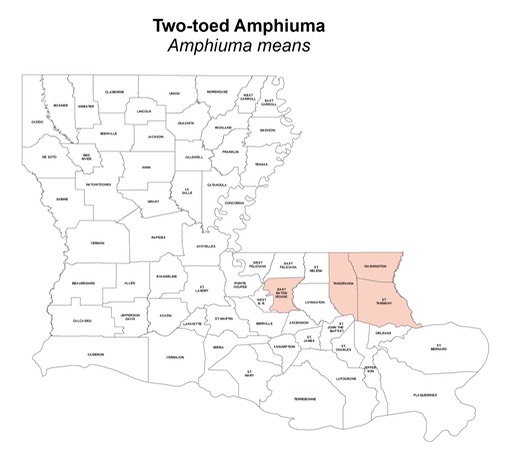
*The colored areas of the map above represent parishes with currently known records for the given species (Source: Jeff Boundy, LA Dept. of Wildlife and Fisheries). By no means does it represent the full range of the species in the state, nor does it necessarily mean that a species can be found throughout the parish with the record. This is provided as a guide to where you might be able to find these species in the state and to aid in identification. A descriptive explanation of the range of each species can be found in the text below.
Other Common Names:
Subspecies: No subspecies recognized.
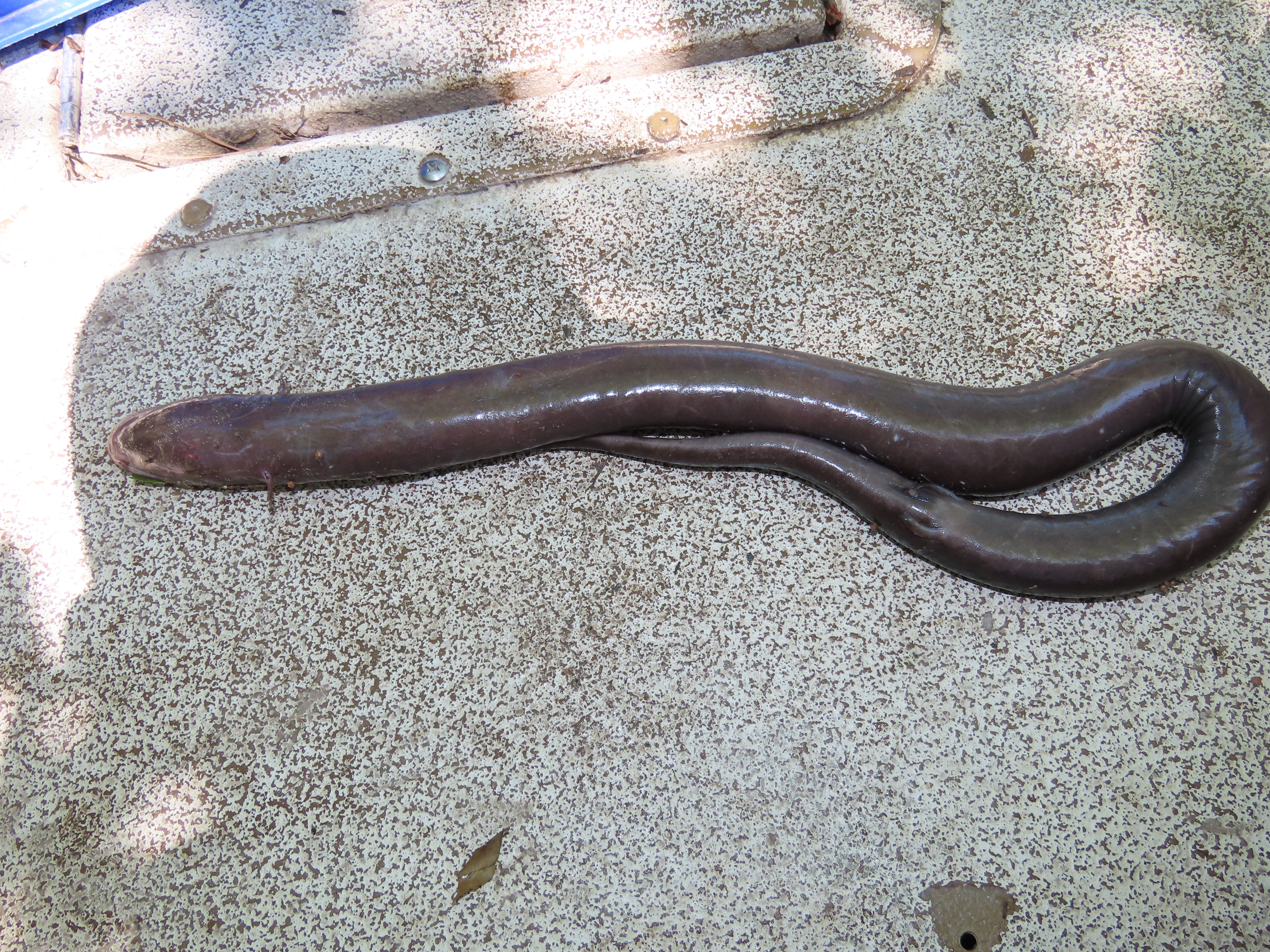
Adult Description: Elongate, large, eel-like salamander (maximum 45.7”). Dark gray or brown to nearly black on top. Four disproportionately tiny limbs relative to body that are virtually functionless, each typically with two toes present. Lacking external gills but a single gill slit is present on each side of head. Reduced eyes lacking eyelids set flush on flat head. Dark patch present on throat. 57–60 costal grooves. Belly and lower sides are dark gray and somewhat lighter than top but not resulting in distinct and abrupt color change from darker top seen in Three-toed Amphiumas.
Similar Species:
Species Range: Coastal Plain from southeastern Virginia south through Florida and west to eastern Louisiana.
Louisiana Range: Predominantly known from areas just north of Lake Pontchartrain but found in other areas in Florida Parishes.
Adult Habitat: Most often encountered in freshwater habitats of pine flatwoods, especially those with little or no current, including ditches, ponds, swamps, oxbows, and streams.
Natural History: Two-toed Amphiumas are aquatic and are most active at night, spending most of their days out of sight in burrows or other shelters. They are ambush predators and prey upon a wide variety of invertebrates, but also take fish, frogs, salamanders, snakes, lizards, and even turtles. Crawfish are perhaps the most important part of their diet. Reported predators include larger amphiuma, alligators, wading birds, and various snakes, especially Red-bellied Mudsnakes. Mating seemingly occurs in winter and females lay 25–210 eggs in a Mardi Gras bead-like string where eggs are connected by thin constrictions. Eggs are laid in depressions the female constructs under cover objects usually near water. The female remains coiled around the eggs, which only hatch after being submerged during rains and rising water. The incubation period of eggs is poorly known but hatching is believed to take 5–6 months. Maturity occurs in 3–4 years. Maximum wild longevity is unknown, but a captive lived 27 years.
Best Time and Place to Observe: Two-toed Amphiumas are primarily nocturnal and without trapping, which can be effective, the best chance to see them is at night with the aid of a powerful headlight as they forage in the shallows. During warm nights of heavy rain, they will sometimes move overland.
Global Conservation Status: Two-toed Amphiumas have a relatively wide distribution in the southeastern United States and a presumed large population, and thus, are listed as Least Concern by the IUCN Red List. Their NatureServe Global Conservation Status Rank is G5 (Secure).
Federal Conservation Status: None.
Louisiana Conservation Status: Two-toed Amphiumas do not have any special status in Louisiana.
Author's Remarks: I have only a few individuals of this species in Louisiana, one was caught in a minnow trap at a private pond in St. Tammany Parish and a few others were captured while trapping for turtles in St. Tammany Parish in 2022.
